
Engineering Service
Business Fit
ML & AI Engineering starts by connecting user needs, operational goals and delivery constraints before implementation begins.
Engineering Service
ML and AI engineering turns data, models, prompts, agents, evaluations, guardrails and deployment pipelines into useful production capabilities.
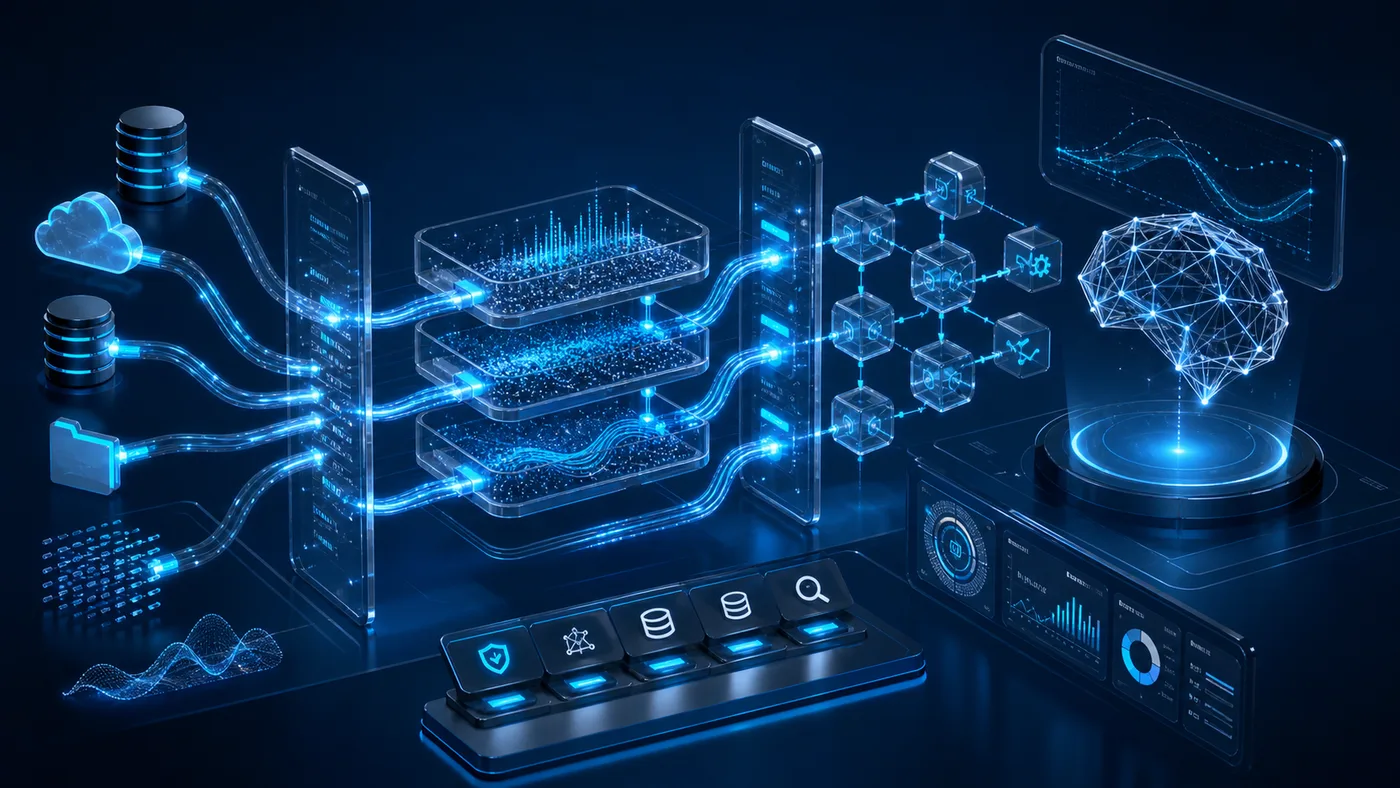
Service Overview
Machine learning, generative AI, agents, computer vision, MLOps and governed AI systems. The work is planned with enough structure to reduce uncertainty while leaving room for iteration, stakeholder feedback and production realities.
ML & AI Engineering starts by connecting user needs, operational goals and delivery constraints before implementation begins.
We consider application layers, data flows, integrations, infrastructure, security, observability and long-term maintenance together.
Work is organized around clear milestones, review loops, measurable quality checks and release-ready execution.
Engineering Depth
Each engagement is shaped around architecture, security, testing, deployment and production operation rather than a single framework choice. The capability mix is adjusted to match the product stage, codebase maturity and delivery pressure.
Detailed Service Sections
Each service area is broken into practical workstreams so buyers can understand what is planned, built, validated and handed over.
We identify where ML, generative AI or automation can improve decisions, reduce manual effort or unlock new product capabilities.
AI systems depend on well-structured sources, clean data, document ingestion, embeddings and governed access patterns.
Prediction, classification, forecasting and anomaly detection models are designed around data quality, evaluation and deployment realities.
Retrieval systems are built with chunking, metadata, vector search, response controls and measurable answer quality.
AI agents are connected to APIs, workflows and business rules with safe tool execution, approvals and auditability.
Production AI needs versioning, evaluation, monitoring, cost controls, guardrails and feedback loops after launch.
Delivery Approach
The engagement is split into practical stages so planning, engineering, validation and operational handoff remain visible throughout the work.
Clarify goals, users, constraints, stakeholders and the exact outcomes expected from ml & ai engineering.
Translate requirements into architecture, backlog structure, delivery phases, risks and practical engineering decisions.
Build the product, platform or capability with frontend, backend, data, cloud, QA and integration work aligned.
Apply code review, test coverage, security checks, performance validation and release readiness practices.
Prepare deployment, rollback plans, monitoring, documentation, handoff notes and stakeholder visibility.
Support production use, collect signals, reduce technical debt and evolve the system as requirements change.
Architecture & Flow
The working model is intentionally explicit: decisions, dependencies, environments, reviews and production signals are represented before the system is treated as finished.
Technology & Quality
Tools and platforms are selected for scalability, performance, maintainability, security and operational requirements. Quality work includes review discipline, testing strategy, deployment readiness and documentation.
Code, architecture and delivery plans are reviewed against maintainability and release impact.
Testing, security checks and performance signals are matched to the risk profile of the work.
Documentation, runbooks and knowledge transfer keep future maintenance practical.
Expected Outcomes
The goal is not only to complete tickets. The work should leave the product, platform or team stronger, easier to operate and better prepared for the next stage.
Talk to Engineering
From the first architecture decision to production deployment and global scaling, Azeosoft Engineering can help design, build and operate the platform.